
08/05/2026 – C. Mia Pettus Official Campaign Launch
Paid for by Pettus for Congress
08/06/2026 – https://palsreport.substack.com/p/constitutional-and-privacy-constraints
Paid for by Pettus for Congress
08/06/2026 – https://palsreport.substack.com/p/the-surveillance-state-and-the-constitution
Paid for by Pettus for Congress
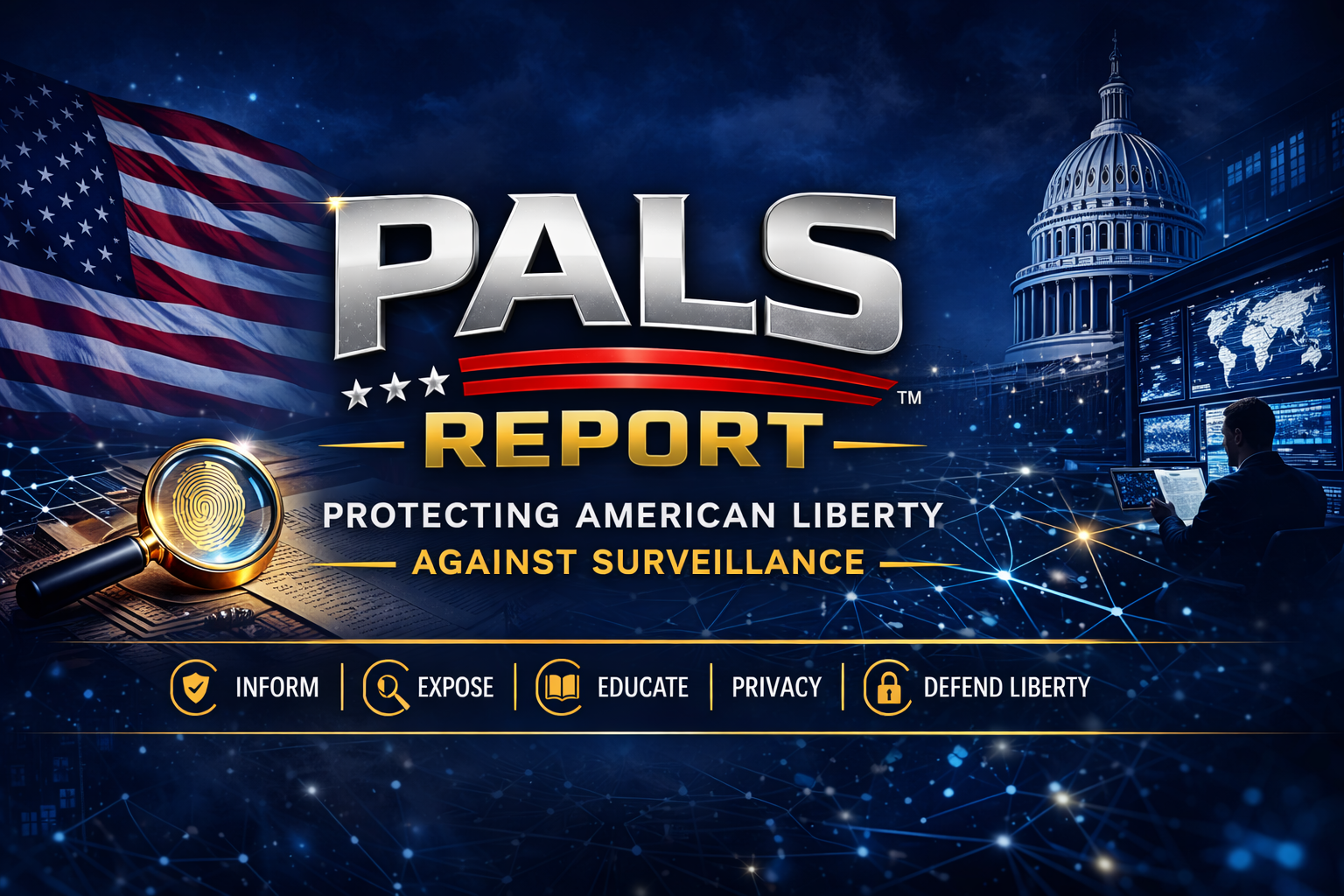
08/07/2026 – PALS Report (Protecting American Liberty Against Surveillance) https://palsreport.substack.com
Paid for by Pettus for Congress
08/19/2026 – CANDIDATE STATEMENT
C. Mia Pettus Condemns Anti-Muslim Demonstration and Violence in Dearborn, Michiganmonstration and Violence in Dearborn, Michigan
August 19, 2026
I condemn the anti-Muslim demonstration organized by Jake Lang in Dearborn, Michigan, on August 18, 2026, and I condemn the violence that occurred during the ensuing confrontation.
There is a fundamental constitutional principle that should not be complicated: the First Amendment protects the free exercise of religion and the freedom of speech for every American. Those protections do not belong exclusively to Christians, Muslims, Jews, or any other faith. They belong to all Americans.
As a constitutionalist and a Christian, I believe Muslim Americans have the same right to practice their faith, worship, assemble peacefully, and participate fully in American civic life as every other American citizen. Targeting an entire religious community with hostility or intimidation is profoundly contrary to the principles of religious liberty upon which our Republic was established.
At the same time, defending the First Amendment does not require defending hateful speech or agreeing with the message being expressed. Constitutional freedom protects speech precisely because government cannot determine which political or religious viewpoints are worthy of protection. But that protection does not extend to violence, assault, credible threats, or other criminal conduct.
When a political demonstration turns violent, the response must be governed by the rule of law—not by political affiliation, religion, ideology, or the popularity of the people involved. Law enforcement must protect lawful expression while holding anyone who commits criminal acts accountable under the same law.
I reject the idea that Americans must choose between free speech, religious liberty, and public safety. We can and must defend all three.
America’s constitutional protections are tested most seriously when the speech we hear is offensive, the disagreement is profound, and emotions are high. That is precisely when constitutional principles matter most.
Religious liberty is not conditional upon whether we approve of someone’s religion. It is a constitutional right. And the Constitution protects the rights of all Americans.
C. Mia Pettus
Candidate for Congress
Michigan’s 8th Congressional District
Restore Constitutional Government. Restore Trust. Restore Liberty.
Paid for by Pettus for Congress.
I’m C. Mia Pettus and I approve this message
08/20/2026 – Black Democratic Women Shape Elections – Do they Shape Outcomes?
Paid for by Pettus for Congress
08/23/2026 – Independent Political Report – Article
09/22/2026 -PALS Report (Protecting American Liberty Against Surveillance) https://bsky.app/profile/palsreport.bsky.social
09/24/2026 – CANDIDATE STATEMENT
09/25/2026 – https://palsreport.substack.com/p/black-christian-conservative-women-a3f
PAID FOR BY PETTUS FOR CONGRESS
09/28/2026 – C. Mia PETTUS CONGRESSIONAL PLATFORM
FULL CONGRESSIONAL PLATFORM
19 POLICY PRIORITIES
1. CONSTITUTIONAL GOVERNMENT
The Constitution is the foundation and establishes limits on federal government power. As a member of Congress, I will take the constitutional oath seriously and evaluate federal legislation, spending, regulation, and government actions against constitutional requirements, individual rights, due process, and separation of powers.
I support legislation that strengthens congressional responsibility to oversee executive agencies, increases transparency when constitutional rights are implicated, and establishes meaningful accountability when officials violate constitutional protections or applicable law.
Rights are not privileges granted by government. Government has an obligation to respect the rights secured to the people.
Particular attention should be given to the First, Fourth, and Fifth Amendments, including freedom of speech and religion, protection against unreasonable searches and seizures, and due process protections involving life, liberty, and property.
Congress has constitutional tools—including hearings, investigations, legislation, appropriations, and oversight—to hold federal agencies accountable.
2. GOVERNMENT TRANSPARENCY, ACCOUNTABILITY & OVERSIGHT
Taxpayers and the public are entitled to know how government power and public resources are being used.
I support stronger congressional oversight, meaningful access to government records, stronger whistleblower protections, independent auditing, and public reporting of federal expenditures, contracts, grants, and program performance.
Congress should examine whether federally funded programs are accomplishing their statutory purposes and whether resources are reaching their intended beneficiaries. When programs are ineffective, wasteful, or improperly administered, Congress needs accurate information to identify the problem and correct it.
Transparency should also apply to government surveillance, data collection, federal contracting, and emerging technologies.
Accountability must apply regardless of which political party controls the White House, Congress, or a federal agency.
3. FOURTH AMENDMENT, PRIVACY & GOVERNMENT SURVEILLANCE
The Fourth Amendment must remain meaningful in the digital age.
Americans should not lose reasonable privacy protections simply because information is stored electronically, held by a third party, transmitted through modern communications systems, or maintained in digital databases.
I support stronger warrant requirements for government surveillance and government access to private information, including identifiable medical information and other sensitive records.
Congress should strengthen surveillance oversight, transparency, judicial review, and accountability for improper access or misuse of personal information.
This includes examination of government access to third-party data, data brokers, digital records, location information, communications, and other databases, as well as appropriate safeguards surrounding FISA Section 702.
4. HUMAN DIGNITY, HOMELESSNESS, POVERTY, MENTAL HEALTH & ADDICTION
People experiencing poverty, homelessness, addiction, mental-health challenges, or other hardships should be treated with dignity while preserving principles of personal responsibility and independence.
Federal resources should be targeted toward treatment, mental-health services, homelessness prevention, supportive housing, workforce development, and addressing the opioid and fentanyl crisis.
The objective should be to help people move toward stability rather than indefinitely managing crisis conditions.
Programs should connect treatment with employment, education, housing, skills development, and economic independence.
People who have served criminal sentences and demonstrated that they are rebuilding their lives should have meaningful second-chance opportunities, including removal of unnecessary barriers to employment, entrepreneurship, bonding, and, where appropriate, eventual homeownership.
Compassion, accountability, and a realistic pathway toward independence should work together.
5. PUBLIC SAFETY & LOCAL LAW ENFORCEMENT
Communities need professional law enforcement officers who are properly trained, equipped, fairly compensated, and held accountable.
Federal resources should prioritize legitimate public-safety needs, including officer compensation, recruitment and retention, training, equipment, emergency response, and ambulances rather than unnecessary surveillance technology.
I support meaningful civilian oversight and appropriately structured local oversight bodies with clearly defined authority, transparent procedures, and public reporting.
Public safety should also include crime prevention through opportunity.
Youth programs should provide access to computer skills, coding, civic education, financial literacy, skilled trades, and employment preparation.
Professional policing, constitutional accountability, community trust, and prevention should operate together.
6. HEALTHCARE AFFORDABILITY, UNIVERSAL ACCESS & QUALITY
Healthcare should be accessible to every American.
I support moving toward universal healthcare through public financing while maintaining private and nonprofit healthcare providers.
My framework is informed in part by the work of Jeffrey Sachs, including universal coverage through public financing and movement away from fee-for-service toward capitation and payment structures that reward prevention, continuity of care, and chronic-condition management.
Policy should expand universal coverage, reduce healthcare costs, lower prescription prices, increase generic competition, address excessive healthcare-market concentration, reduce unnecessary administrative costs, and protect families from unaffordable out-of-pocket expenses.
Community and preventive care should be expanded.
Healthcare financing and delivery should be structured so that people can obtain care, providers can focus on patients, and families are not financially devastated by necessary medical treatment.
Healthcare executive compensation and administrative expenditures should also receive appropriate scrutiny where they contribute to excessive healthcare costs.
7. AFFORDABLE HOUSING & HOMEOWNERSHIP
Federal housing policy should make better use of existing housing while expanding opportunities for affordable housing and homeownership.
Federal resources should support rehabilitation of existing homes when economically practical, weatherization, necessary repairs, and conversion of appropriate vacant or underused buildings.
Housing programs should address homelessness and housing instability while preserving neighborhoods and preventing deterioration.
Congress should examine unnecessary federal barriers to homeownership for qualified individuals, including people who have successfully completed criminal sentences and demonstrated responsibility.
The objective should be to preserve existing housing, improve neighborhoods, increase housing stability, and expand legitimate opportunities for homeownership.
8. VETERANS & MILITARY
The federal government has a responsibility to honor its commitments to those who served.
Veterans should have meaningful access to healthcare, earned benefits, disability services, employment opportunities, housing assistance, and other services without unnecessary bureaucratic barriers.
Veterans’ programs should be evaluated based on actual access, efficiency, outcomes, and administrative barriers—not simply the amount of money allocated.
National defense requires appropriate military readiness and resources, accompanied by congressional oversight of military spending and procurement.
The people who serve should not have to fight the federal government to receive the benefits and care promised to them.
9. DISABILITY RIGHTS & CAREGIVERS
People with disabilities should have their rights, dignity, independence, accessibility, and equal treatment protected.
Federal programs should promote independence and make it easier for qualified individuals to obtain services for which they are eligible.
I support reducing unnecessary administrative barriers, improving accessibility and transparency, and making federal disability programs easier to navigate.
Family caregivers are an essential part of the support system and often carry significant economic and personal burdens.
Federal policy should consider appropriate assistance, resources, respite, training, and support for caregivers.
Disability assistance should promote dignity and independence rather than creating unnecessary bureaucratic obstacles.
10. IMMIGRATION & BORDER SECURITY
My immigration framework is informed by the work of the U.S. Commission on Immigration Reform chaired by Barbara Jordan, adapted to the circumstances of 2026.
The United States should have secure borders, credible enforcement, orderly legal immigration, employer accountability when employers knowingly violate immigration requirements, and enforcement against serious criminal conduct.
Immigration laws must be enforceable. Routine non-enforcement can undermine public confidence in the rule of law.
Enforcement must comply with the Constitution, federal statutes, and due-process protections.
The legal immigration system should be improved so that it is orderly, understandable, enforceable, and aligned with the national interest.
Employers who knowingly exploit unauthorized labor should be held accountable while American workers are protected against unfair labor-market practices.
Immigration policy should balance enforcement, legal immigration, employer accountability, national security, due process, and human dignity.
11. ENERGY AFFORDABILITY & GRID MODERNIZATION
Michigan needs a reliable, affordable, sustainable, and technologically modern energy system.
My energy framework is informed by Jeffrey Sachs’s approach to sustainable energy, economic development, and environmental responsibility, adapted to Michigan.
I support modernization of the electric grid, improved reliability, expanded affordable solar and sustainable energy, energy efficiency, and infrastructure necessary for a modern energy system.
Consumers should be protected from major new energy users and large infrastructure developments shifting disproportionate costs onto residential customers and small businesses.
Energy policy should support sustainable manufacturing, American energy and technology industries, and worker preparation for changes in manufacturing and energy technology.
The objective is a reliable, affordable, sustainable system capable of supporting households, businesses, manufacturing, and economic growth.
12. ECONOMIC OPPORTUNITY, SMALL BUSINESS, DEREGULATION & DECENTRALIZATION
Government should create conditions in which individuals can work, start businesses, manufacture products, acquire skills, and achieve financial independence without unnecessary bureaucracy.
I support deregulation where regulations are unnecessary, duplicative, excessively burdensome, or prevent small businesses from operating and competing, while retaining necessary worker, consumer, public-safety, environmental, and constitutional protections.
Economic decision-making should be decentralized where appropriate so individuals, communities, small businesses, and local institutions can solve problems rather than relying unnecessarily on centralized systems.
Federal policy should support small-business development, American manufacturing, skilled trades, apprenticeships, workforce training, and entrepreneurship.
Vacant commercial property should be considered for redevelopment into affordable marketplaces for small businesses, craftspeople, and local entrepreneurs.
Where appropriate, customer-service and call-center employment should be brought back to Michigan and the United States, particularly where overseas processing affects American employment or involves sensitive consumer information.
The objective is greater opportunity, competition, entrepreneurship, productive employment, and financial independence.
13. AGRICULTURE & FOOD SECURITY
Agriculture is essential to Michigan’s economy and to national food security.
Federal policy should support Michigan farmers, domestic agricultural production, resilient supply chains, and policies that allow farms to remain economically viable.
Congress should examine market concentration throughout the agricultural and food supply chain because excessive market power can limit competition and affect farmers and consumers.
Pricing should be examined using evidence. Not every price increase is necessarily unlawful, but consumers and producers deserve transparency and competitive markets.
Competition laws should be enforced when violations are identified.
Federal policy should protect the reliability of the domestic food supply and reduce vulnerabilities in agricultural and food-supply chains.
14. CONSUMER PROTECTION & COMPETITION
Consumers should understand how their personal information is collected, used, sold, shared, and retained.
I support stronger consumer-data protections and consideration of principles contained in California’s CCPA and CPRA as models where appropriate for federal policy.
Consumers should have greater transparency regarding personal-data collection, sale, sharing, and use, along with stronger protections against unauthorized use.
Congress should also strengthen meaningful competition and enforce competition laws against anti-competitive conduct.
Excessive concentration in healthcare and other markets can reduce consumer choice and create opportunities for higher prices.
This is a pro-competition, not anti-business, approach. Smaller competitors and consumers should have meaningful opportunities to participate in and benefit from competitive markets.
15. INFRASTRUCTURE & RESPONSIBLE TECHNOLOGY
Reliable infrastructure and responsible technology are essential to modern communities.
Communities should not be required to accept every technology project simply because it is described as economic development.
I oppose unnecessary data-center expansion when the energy, water, infrastructure, environmental, or financial costs are shifted onto Michigan residents.
Major technology infrastructure projects should account for their resource and infrastructure demands rather than requiring households and small businesses to subsidize private development.
I also oppose unnecessary expansion of mass-surveillance technology such as FLOCK when significant privacy and constitutional concerns exist.
Congress should establish appropriate safeguards for automated license-plate readers and similar systems, including rules concerning warrants, access, retention, sharing, and deletion of collected information.
Technology should serve the public without creating unnecessary surveillance or shifting private-development costs onto taxpayers and ratepayers.
16. EDUCATION & WORKFORCE DEVELOPMENT
Parents should have a meaningful role in determining the educational path of their children.
I support school choice among public schools, charter schools, private schools, and homeschooling, with education funding following the student and accountability for public funds.
Education policy should also invest in skilled trades, apprenticeships, vocational education, workforce training, coding, computer skills, financial literacy, and practical career preparation.
A four-year college degree should not be treated as the only legitimate path to a productive career.
Michigan and America need electricians, mechanics, technicians, builders, manufacturers, healthcare workers, technology workers, entrepreneurs, and skilled professionals.
Education and workforce development should be connected to actual employment opportunities and changes in manufacturing, technology, energy, and the broader economy.
17. ENVIRONMENTAL STEWARDSHIP & NATURAL RESOURCES
My environmental framework is informed by Jeffrey Sachs’s sustainable-development approach, which connects energy, economic opportunity, and environmental protection.
Michigan must protect the Great Lakes, freshwater resources, drinking water, air, land, forests, and other natural resources.
Policy should address pollution reduction, sustainable energy and manufacturing, conservation, responsible resource management, and infrastructure that reduces environmental risks.
Environmental protection should not automatically require abandoning workers or communities affected by economic or energy transitions.
Workforce development, retraining, skilled trades, and economic opportunities in sustainable industries should be part of responsible environmental policy.
The goal is to protect natural resources while allowing responsible development, innovation, manufacturing, and employment.
18. REPRODUCTIVE HEALTH, PATIENT AUTONOMY & MEDICAL PRIVACY
I support a woman’s right to make reproductive healthcare decisions.
My Christian faith personally favors carrying a pregnancy to term and protecting unborn life. At the same time, I support meaningful resources, economic assistance, healthcare, and practical alternatives that can make continuing a pregnancy more feasible for women who want that support.
Personal moral beliefs must be distinguished from the proper scope of government power.
Reproductive healthcare decisions should primarily involve patients and healthcare professionals, with respect for medical privacy and patient autonomy.
I support strengthening HIPAA and related medical-privacy protections and establishing stronger warrant protections for government access to identifiable medical information.
Government should not obtain private medical records simply because those records could be useful to an investigation.
There should be meaningful notice and accountability when protected medical information is accessed, subject to narrowly defined legal exceptions.
19. COMMUNITY PROJECT FUNDING & BRINGING FEDERAL RESOURCES BACK TO MICHIGAN
As a member of Congress, I will pursue legitimate federal resources for Michigan’s 8th Congressional District through authorized congressional appropriations and Community Project Funding when eligible requirements are satisfied and there is a genuine community need.
Potential projects may include public-safety infrastructure, community facilities, workforce-training facilities, transportation infrastructure, water infrastructure, and other authorized federal programs.
A member of Congress does not personally “give” federal money to a community. A member requests funding, Congress approves it through the legislative process, and the President signs the resulting legislation.
I will support transparency concerning requested projects, including public disclosure of the project, recipient, amount, purpose, federal nexus, and expected taxpayer and community benefit.
Federal resources should be used to advocate for Michigan while maintaining transparency, accountability, and responsible stewardship of taxpayer funds.
GOVERNING PRINCIPLES
CONSTITUTIONAL GOVERNMENT
INDIVIDUAL LIBERTY
TRANSPARENCY
ACCOUNTABILITY
RESPONSIBLE STEWARDSHIP OF TAXPAYER RESOURCES
ECONOMIC OPPORTUNITY
HUMAN DIGNITY
SAFE COMMUNITIES
DECENTRALIZATION
LIMITED GOVERNMENT
C. Mia Pettus
Libertarian Candidate for U.S. Congress
Michigan’s 8th Congressional District
Paid for by Pettus for Congress